(Just as I wasn’t expecting to throw out a review this early in the year, I also never thought Pedro the Lion would be the band that rose up from the past to blindside me in the best way possible. But here we are, and here I am putting this album on infinite repeat and finding something new to love every time.)
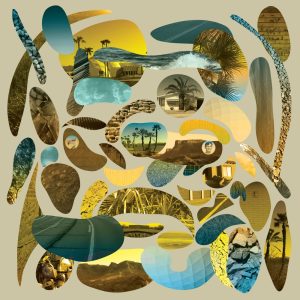
Havasu by Pedro the Lion
Released: 20 January 2022
I lost track of Pedro the Lion in the early aughts, somewhere around Control and Achilles Heel, when the music David Bazan was making and the music I was looking for seemed to become two diverging journeys. Havasu is the album that didn’t just get my attention again: It yanked me back as hard as it could and it hasn’t let go yet.
I can’t even venture to guess the last time I went from learning a thing exists to not being able to live without it at such breakneck speeds. Though I’ve seen his name attached to all kinds of projects and always meant to check them out, I haven’t listened to a thing Bazan has done since roughly 2004, so I had no idea this album was just waiting to spring itself on a world of unsuspecting earballs: I tapped on the little Spotify new-content alert expecting a new episode of the Always Sunny podcast, not an album from a once deeply loved but mostly forgotten musical outfit that was about to make me spend its first four songs hanging onto every note in dazzled silence, excepting the occasional involuntary, reverently awed mumblings about is this what I’ve been missing out on by letting Bazan’s music fall to the wayside? (Admittedly, it did make me feel a little better when I found out that no one else knew Havasu was coming, either—it’s nice to pretend I’m not as out of the loop as I feel, y’know?)
Having been away from Bazan’s projects for so long, it took me a full play and a half to get over how much (but also how little?) his voice has changed in the nearly two decades since I last gobbled up his music. I never thought he sounded like he’s been channeling the spirit of Tom Petty before, but that’s all I could think while taking in how much smoother and more tonal his vocals are these days.
Putting that slack-jawed first impression behind me (I mean, I know time’s had its way with all of us since the early 2000s, but it’s still a shock to confront that time-jump), I have played and played and played this album, drinking in every lyric, note and observation and always finding something new to either be gutted by or painfully relate to with every rotation. I was also furiously and retrospectively reacquainting myself with everything Bazan’s been up to these past two decades, which revealed that he also left Pedro behind for a little while, until he started making music about the places he grew up, revisiting them and those years with each new municipally titled chapter; this is the second installment in that proposed five-album project.
I mean… do I need to show all y’all around these parts to illustrate exactly why I love that concept as much as I do? I won’t compare a self-indulgent hobby of a blog to a longtime musical outfit’s sixth full-length (to say nothing of EPs, singles and projects both side and solo), but turning such profoundly personal narratives into music for other people makes me feel inexplicably justified in embarking on a long-term project that ultimately just wants to make the world feel more relatable through the filter of individual experiences, emotions and relationships with music. I’m increasingly confident that, as the human species becomes more insular, making the constants of the human experience feel less isolating will only become more of an imperative.
And Havasu is an understated, lovingly wrought masterclass in distilling deeply personal, formative experiences into the essence of what makes them poignant expressions of universally understood growing pains. “First Drum Set” speaks of an auspicious passion for middle-school band that my half-hearted but weirdly persistent time with first the clarinet and then the tenor sax just can’t relate to, but I certainly understand through parallel journeys with those adolescent pursuits that did find fertile soil; while I did wind up half a continent away from the place I was born, I made that move at a barely cogent 3 and didn’t flee the town I grew up in ’til college sprung me 15 years and an entire K-12 education later, but I was the one left behind often enough to understand Bazan’s musical testament to the oft-uprooted obverse of my experiences. Realizing that any combination of a stifling religious upbringing, tyrannical parents and adults who just don’t care yields the sense of being so thoroughly “bred to believe, taught to obey” that you fear you’ve been overtaken by an unthinking obedience that’s more about avoiding disappointment-fueled repercussions than any sincere deference, and that your bland facade has been too successful at hiding your vast and wonderful inner landscape for so long that you “hope it’s not too late / For someone to know me” instead of dismissing you for another false impression.
For me, what cuts deepest and feels more intimately familiar with every play is that dawning awareness of your parents as people independent of their children, and whose actions don’t always seem to take their dependents’ best interests into consideration, which are so matter-of-factly described in “Old Wisdom.” The song absolutely throbs with mutually understood old wounds that are sustained so deeply and indelibly that lines like “But you always had a choice / Between making a disciple / And knowing your little boy” speak to how just-below-the-surface they’re forever doomed to be. For all the things in this album that hit too close to home, it’s the agony in “Old Wisdom” that keeps feeling more and more mine, etched so carefully across depictions of a maturing child who’s grappling to understand his parents more than they’re trying to know him and has already learned there’s no point in being real with them, culminating in observations like “Kids in turmoil / Thinking it’s their fault.” I always wonder if I hold my childhood a little too closely in what it taught me and way too at arm’s-length in terms of accurately recalled specifics, and this song reassured me that at least one other someone else gets it. It’s the kind of compassionate companionship that launches a thousand therapist-couch breakthroughs.
Thing is, though, personal footholds are irrelevant when you’ve got someone slinging stripped-down lyrics as honestly as Bazan is: I have no idea what it’s like to find your young self ping-ponging from place to place and dogged by rigid religious boundaries the whole time, but Bazan makes that experience feel just as ordinary and accessible as your first dizzying kiss and the first crushing blow of heartache. And there’s plenty of the latter to go around, because adolescence is just a parade of foundational wounds: “Stranger” achingly recounts being snubbed at a couples’ skate and finding solace in the sweet embrace of the snack bar; “Good Feeling” is just raining down blows of emotion as Bazan says his conflicted goodbyes to the place he called home for a brief but significant year, ultimately ending on the bruiser of “I almost didn’t make it / But here I finally am;” every rite of passage that arrives alongside fumbling puppy love—the giddily shared crushes, the novel thrill of first kisses, the capricious breakups that come on just as unpredictably as everything else about those years—makes their clumsy, inexperienced way into these lyrics.
A fondness for overstatement aside, I could not be less hyperbolic when I say that every new listen had a new treat to offer, like turning familiar memories over and over again and always finding fresh revelatory nuance beneath the dust of ages. The eagerness to connect with your classmates being perennially undermined by an uncontrollable verbal torrent of over-earnest over-sharing that literally everyone else seemed to have figured out how to staunch is all there to relive word by regrettable word in “Too Much.” The paranoia-inducing deja vu of “Teenage Sequencer” and its too-familiar retelling of how quickly the butterflies of a blossoming romance can make you sick to your stomach with whiplash rejection. The perpetual discomfort of giving yourself up to a world that doesn’t seem made for you (or even seems to want you) because you know you have to but you’d really rather not is too perfectly recounted in “Making the Most of It.” Back to “Too Much” again, only this time it’s the sly admission that you are still an over-excited child bringing too much desperation to casual conversation, it’s just that you’ve just learned to bridge the distance with moderate success by watching normal people do it enough times (and saving those whole-body cringes for the safety of nonjudgmental solitude). The little moments where every piece of the song comes together in an emphatically thematic crescendo, like how “Teenager Sequencer” (which, along with “Too Much” [and increasingly “Old Wisdom”] might be my favorite song here) trails off into eternally unresolved unknowns with “you wished you had stayed through the end of our song” while “First Drum Set” explodes in a hail of triumphant percussion as soon as the titular instrument makes its life-altering (and, ultimately, -saving) entrance. (The latter song also describes music as “play[ing] sports about my feelings,” which I just fucking love and feels as lived-in and honest as a beleaguered middle school band conductor’s wailing “I’m up to my ears in tenors and altos!”)
Every single adolescent feeling is so new and all-encompassing that they’re forever bumping into and rubbing against each other, charging every unfamiliar emotional cue with the confused immersion of every other one jostling for prominence in a body that is all elbows and knees and is doomed to be ruled by a maelstrom of hormones that’ll be firing on all cylinders for a couple more interminable years. Havasu bears witness to and honors them all, letting them roam throughout the album instead of forcing them to fit neatly into just one unnaturally compartmentalizing song, which allows them to develop into albumwide themes and lessons that come into focus at their own pace, refined with every song by laid-bare song.
Approaching the tangle of middle-school emotions as a thing that’s impossible to reduce to just one moment or influencing factor or painful memory is one of the clearest signs that Bazan seized upon this retrospective album as an opportunity to finally show his younger self the kindness and understanding he was always grasping for but never found (and also compelling evidence that extraordinary kindness begets a needful honesty that benefits everyone), that he has become the person Pre-Teen Bazan needed to hear that comforting, recontextualizing “Buddy, it don’t work that way / Don’t let yourself be buried here for always” from. Treating one’s inner child not as a perpetually wounded spectre haunting your grown-up peace of mind but as the first stumbling hints of the person you will become/are fated to always be is the stuff of accepting that while you are never responsible for the trauma inflicted upon you, you are responsible for healing from it so you don’t perpetuate the cycle, and it’s wonderfully demonstrative of just how much peace (or at least clarity) this project is already offering Bazan.
I’m increasingly of the mindset that the highest function of art isn’t to be “good” so much as it to inspire a feeling and offer some insight into the whys of the world. I think the greatest success of Havasu, whether it’s intentional or not, is offering an extended hand and earnest reminder that we are all a little less alone and a little more understood than we know, along with the promise that this, too, will pass, even if it passes like a kidney stone. It’s proof that becoming less self-obsessed and more self-aware is all in learning to see where your ongoing journey complements and deviates from others’, and managing the impact your intertwining worlds has on the people who exist in the same space as you and among the wreckage of your presence.
Selfishly, it is so goddam fitting that a PTL album drenched in retrospection rocked me back to my own hometown, some of the most uncomfortably formative years of my youth, and the people I loved this band with. Bazan came crashing back to his short-lived home of Lake Havasu like I unexpectedly landed explosively in love with the album it inspired and, even though I’ve been working in and writing about my hometown for years now and have witnessed its slow evolution away from the familiarity it once possessed, the sheer shock of submitting yourself to something you knew well as a child and are suddenly seeing through an adult’s eyes is surreal no matter how steeled and prepared and desensitized you think you are. But it also allows you to take the ghost of your younger self by the hand and show them how little power these places and those people have over you now, and to honor rather than fear them because maybe all the wholly unique things that hurt you enough to leave a mark are a part of the person you finally got to be when you stopped going along to get along once you finally had the space and freedom to realize that making the most of it works much better as a personal challenge than a defeated survival strategy.
 12,700 Songs
2 thoughts on “Album review: Havasu by Pedro the Lion”